

Thinking about trying behavioral therapy for ADHD in Riverton? You’re not alone. Whether you’re a parent trying to help your child or you’re an adult figuring things out for yourself, it helps to know what therapy actually looks like and how it can make life easier. At Renova Wellness & Consulting, Joseph Gleed understands that you’re not looking for fluff or lectures. You want real strategies that work in real life.
Joseph brings over 20 years of experience, helping everyone from military veterans to first responders to local families who just want life to feel less overwhelming. His approach isn’t rigid or one-size-fits-all. It’s based on evidence, compassion, and your actual day-to-day reality.
What Exactly Is Behavioral Therapy for ADHD?
Behavioral therapy helps people with ADHD build new habits and reduce frustration. It’s not about trying harder or punishing yourself when you mess up. It’s about learning new ways to respond to tricky moments so that things start to feel less chaotic.
At Renova Wellness & Consulting, sessions are personalized and collaborative. Joseph might introduce visuals or reward systems for younger kids, while adults might work on setting weekly goals, reducing distractions, or getting better at transitions. Clients from Riverton East to South Jordan say the structure helps, but it’s the compassion and flexibility that really make the difference.
Core Techniques That Make a Difference
There’s no magic formula when it comes to managing ADHD, but there are tried-and-true strategies that work when they’re practiced regularly. What matters most is that these tools actually make sense in your day-to-day routine. Whether you’re juggling school mornings in Bluffdale or working from home in Harvest Park, the right techniques can help you create more calm and less chaos.
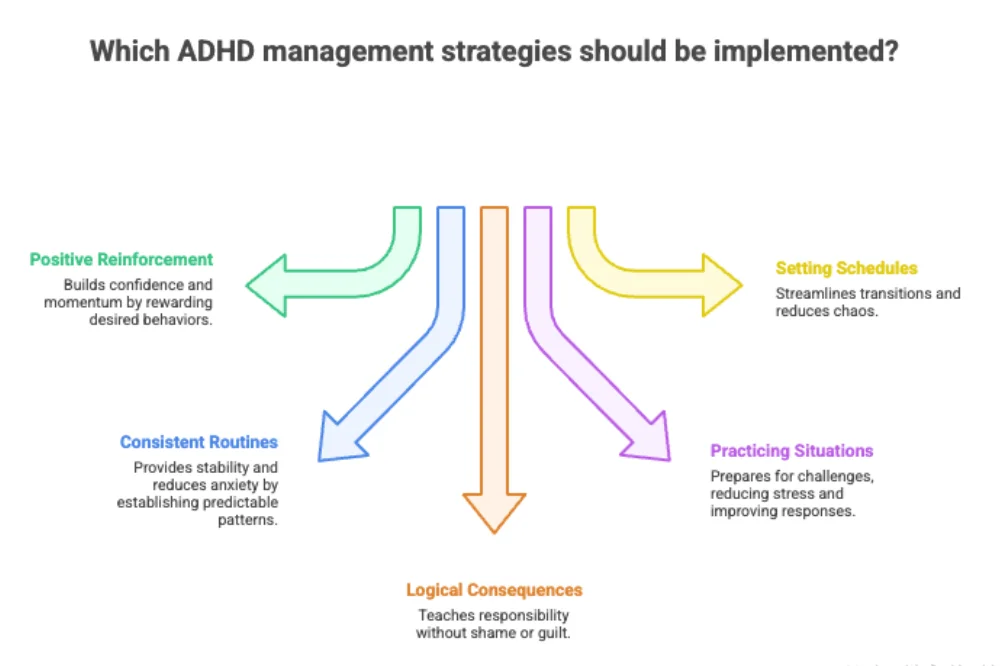
These are the kinds of approaches we use and tailor to each person or family:
- Positive reinforcement that builds momentum and confidence
- Consistent routines and expectations that help everyone breathe easier
- Logical, natural consequences (not shame or guilt)
- Practicing how to handle tough situations before they happen
- Setting schedules that make transitions less chaotic
These aren’t just items on a checklist. We work with you to find out which ones actually stick. Some families love visual reminders, while others respond better to routines built around mealtimes or bedtime. Whatever works, we help you fine-tune it so it becomes second nature. You don’t have to figure it out alone, and you don’t have to get it perfect, you just need to start with the tools that actually fit.
Is Behavioral Therapy Enough on Its Own?
Sometimes therapy is all someone needs to feel more in control. For others, it’s an important piece of a larger plan. ADHD affects people in different ways, so the treatment approach should reflect that. Some individuals thrive with behavioral therapy alone, especially when the environment at home or work is supportive and predictable.
But when symptoms are more intense, persistent, or tied to other challenges like anxiety or sleep disruption, we often recommend layering in additional support. Medication is a common option that can help boost focus and reduce impulsivity. It often clears the mental fog, allowing therapy to work even better. Many families in West Jordan and Rose Creek tell us the combo made things click faster.
We also look at options like:
- Parent training and coaching at home
- Collaborating with schools on IEPs or classroom strategies
- Mindfulness or breathing practices to lower stress
- Sleep and nutrition tools that support brain health
When these supports come together, they create a solid framework for change. Therapy doesn’t have to do all the heavy lifting, and honestly, it works better when it doesn’t have to. At Renova, we help you build a plan that supports your specific needs, and evolves with you over time.
Comparing Behavioral Therapy to Other ADHD Treatments
It’s common to feel overwhelmed by the options when you start looking into ADHD care. What’s better, therapy or meds? Should you try coaching? Do mindfulness apps actually help? These are good questions, and the honest answer is: it depends on what you need, how your brain works, and what kind of support you already have at home, school, or work.
Here’s a helpful side-by-side view of the most common ADHD treatments and how they work:
| Treatment Approach | Focus Area | Best For |
| Behavioral Therapy | Habits, structure, skills | Kids, teens, and adults |
| Medication (e.g. stimulants) | Focus and impulse regulation | Moderate to severe ADHD |
| Parent Training | Home support and structure | Families with younger kids |
| Coaching | Planning and daily follow-through | Adults and college students |
| Mindfulness/CBT | Managing stress and emotions | Teens and adults with anxiety |
No two people are exactly the same, and ADHD doesn’t show up the same way in everyone. That’s why a personalized approach matters so much. We’re not here to tell you what to do. We’re here to listen, guide, and help you make choices that fit your family, your schedule, and your long-term goals.
What Progress Looks Like in Real Life
We wish progress came with a giant flashing sign, but honestly? It usually shows up quietly. It’s your kid pausing before snapping. Or getting through bedtime without tears. It’s you realizing you didn’t procrastinate today, or at least, not as much as usual.
Over time, we look for signs like more follow-through at school or work, fewer emotional blowups, and better sleep or morning routines. Maybe your child starts remembering their backpack. Maybe you stop feeling like every day is an emergency. Those changes add up.
And the best part? Parents from places like Mountain View and Daybreak tell us therapy helped them feel more connected to their kids again. It’s not about fixing everything overnight. It’s about creating space to breathe, and a plan that actually works.
Taking the First Step Toward Better Focus and Peace of Mind
If ADHD is making life harder than it has to be, you don’t need to figure it out alone. Joseph Gleed and our team at Renova Wellness & Consulting are here to help you find what works for your unique situation and to keep it real along the way.
You’re not broken. You’re just trying to find your rhythm. We’re not here to lecture or hand you a list. We’re here to walk with you and build something better together. And when that happens, when the day feels smoother, when your family feels more connected, it’s one of the best feelings in the world.
Want to get started? Call us at (801) 317-8522 or stop by Renova in Riverton. Here’s our location: Google CID.
Frequently Asked Questions
What age is best to start behavioral therapy for ADHD?
Families don’t want to “wait and see” if that means losing precious time, but they also don’t want to start too early or do something unnecessary.
What they should ask instead: When is the earliest it makes sense to start behavior therapy, and why do major health organizations recommend starting young?
- Immediate Insight: Earlier is usually better. Children as young as 4–5 can benefit from simple behavioral routines, reward systems, and parent training that build self‑control in age‑appropriate ways. The CDC and American Psychological Association (APA) list behavior therapy as a first‑line treatment for young children with ADHD symptoms.[CDC][APA]
- Supporting Context: For preschool and early‑elementary children, guidelines emphasize starting with behavioral and parent‑training approaches before considering medication, because these strategies improve attention and reduce disruptive behavior while also strengthening family skills.[CDC][APA]
- Deeper Implication: Starting early doesn’t lock you into one path, it gives your child a foundation of skills and structure. If medication is added later, it’s layered on top of strong habits instead of trying to replace them.
Can adults benefit from behavioral therapy too?
Many adults think they “missed the window” and that therapy is only for kids, or they’ve tried generic time‑management tips that didn’t stick.
What they should ask instead: How can behavioral therapy help adults with ADHD in practical, day‑to‑day life?”
- Immediate Insight: Yes, adults can gain a lot from behavioral therapy and ADHD‑focused coaching. Evidence shows that structured strategies for planning, time‑management, and organization reduce symptoms and improve functioning when matched to an adult’s real routines and responsibilities.[NIH][APA]
- Supporting Context: Research on adults with ADHD highlights benefits like better follow‑through on tasks, fewer missed deadlines, improved emotional regulation, and lower stress when therapy targets specific problem areas (work, relationships, finances) rather than abstract advice.[NIH][APA‑Stress]
- Deeper Implication: It’s never “too late.” Tailored behavioral tools plus self‑awareness can help adults rewrite long‑standing patterns, supporting careers, parenting, and mental health alongside or even without medication, depending on needs.
Do I still need medication if I do behavioral therapy?
Families and adults often want to avoid medication if possible, but they also don’t want to miss out on something that could help.
What they should ask instead: When is behavior therapy alone enough, and when does combining it with medication make the most sense?
- Immediate Insight: Not everyone needs medication. Some children and adults do very well with behavioral therapy and environmental supports alone; others get the best results when medication and therapy are combined. The American Academy of Pediatrics (AAP) notes that combined treatment often produces the strongest overall outcomes for school‑age children.[AAP]
- Supporting Context: Medication primarily targets core symptoms (inattention, impulsivity, hyperactivity), while behavioral therapy builds lasting skills, like planning, follow‑through, and coping strategies, that remain even if medication is changed.[CDC][AAP]
- Deeper Implication: The decision isn’t all‑or‑nothing or permanent. A good clinician will look at severity, impairment, and family preferences, often starting with behavior therapy (especially in younger kids) and considering medication if functioning is still significantly limited.
How soon will we see results?
Families want realistic expectations so they don’t give up too early, or assume therapy isn’t working when it’s actually on track.
What they should ask instead: How quickly do behavior changes usually show up, and what determines the speed of progress?
- Immediate Insight: Many families notice small shifts, like smoother transitions or fewer arguments, within a few weeks. Bigger, more stable changes in behavior and routines usually take a couple of months of consistent practice.
- Supporting Context: Studies of behavioral and parent‑training programs for ADHD show that consistency between sessions (using the same strategies at home and school) is the strongest predictor of progress, not just the number of clinic visits.
- Deeper Implication: Think of behavior therapy like building a muscle: each week of practice adds up. When parents and adults use the tools daily, rewards, visual schedules, checklists, planned breaks, skills generalize faster and stick longer.